Automotive Blog Automotive Blog brings you the latest news, car reviews and information on the automotive industry.
One of the biggest questions drivers ask before switching to an electric vehicle is simple: “How far can it really go?” Most EV reviews answer this by quoting official range figures, battery sizes, and charging times. While those numbers are useful, they often fail to explain what happens during real motorway driving. Similar to how platforms like PHarcade focus on delivering real user experiences rather than just surface-level features, many EV buyers today are also looking for practical insights instead of relying only on official specifications.
For many UK drivers, motorway travel is part of everyday life. Long commutes, weekend trips, and cross-country journeys all place different demands on an EV compared to city driving. This is where advertised figures and real-world experience can feel very different.
The truth is that motorway range is one of the most misunderstood parts of EV ownership.
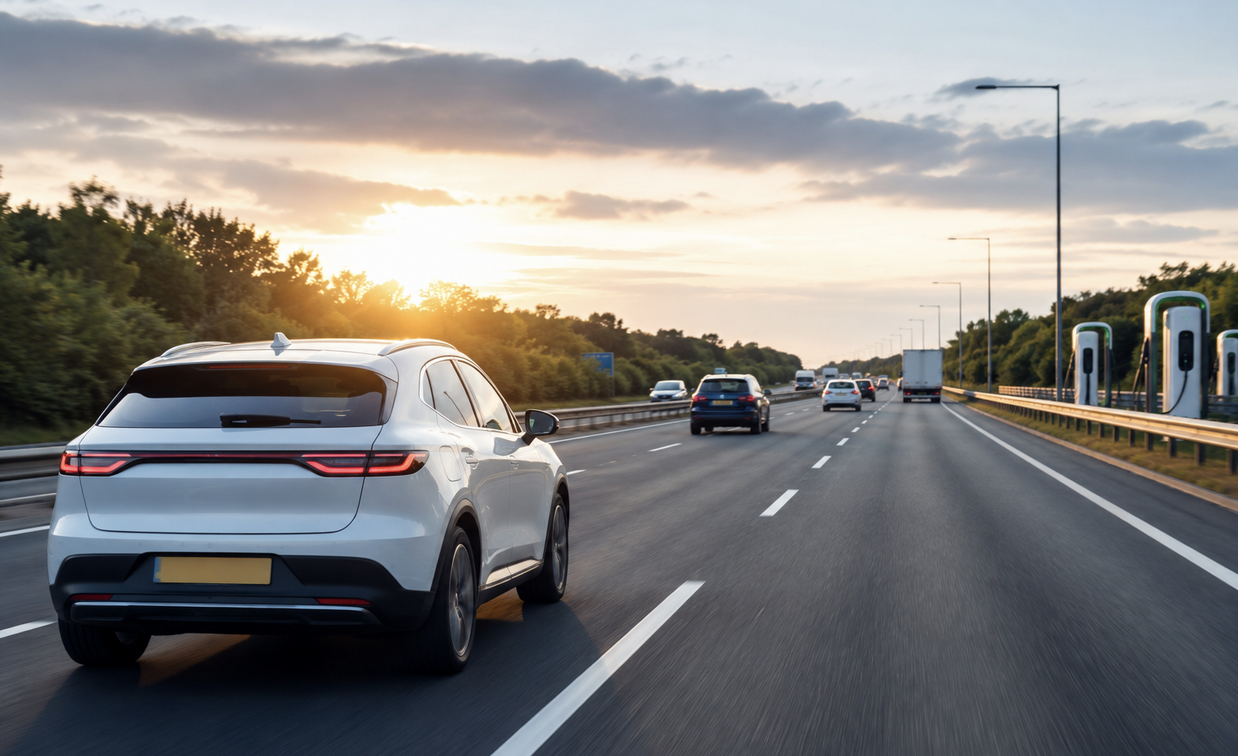
Why Motorway Driving Changes EV Efficiency
Typically, electric vehicles undergo uniform standardized testing of some form such as the WLTP. By utilising these tests, consistency is provided amongst the various models of the electric vehicle market; however, they still do not show the realistic driving conditions experienced by every day motorists.
Electric vehicles exhibit a high level of efficient operation at lower speeds within city limits. When driving in start-stop traffic, regenerative braking systems are able to capture energy and provide improved levels of efficiency.
The driving experience on an electric vehicle is drastically changed once the vehicle reaches highway speeds, as higher speeds pose an increased aerodynamic drag on the vehicle.
Unlike gasoline and diesel vehicles, electric vehicles total efficiency can decline much more than that of gasoline or diesel vehicles due to the length of time the vehicle is driven on a highway as compared to in city limits,, when averaged over time.
Weather Has a Bigger Impact Than Expected
Weather factors are also mentioned minimally in many reviews. When cold outside, battery efficiency decreases due to energy consumed to make up for cold weather and for running many electrical components.
The greatest demand for electricity during winter months comes from the use of heating systems, lights, heated seats, defrosters, etc., which require energy to operate while driving on a motorway.
Rain and wind resistance cause further reduction in energy consumption compared to driving on dry roads and without wind resistance.
Therefore, a journey on a motorway during winter months could have entirely different results than a journey at milder temperatures.
This doesn’t mean EV’s do not perform as well in adverse weather conditions, merely that the quoted EV range on most EV manufacturers’ websites should be taken as estimates and not as a guarantee.
Driving Style Matters More Than Many Realise
You cannot simply just take a bigger battery and have a solution for every range problem. Your driving style is just as important as the size of your battery in determining how far you can go. For example, if you drive aggressively, such as taking off quickly from the light, or going fast while driving on the highway, you will deplete your battery much more quickly than if you were to drive at a steady, controlled pace. Two people driving the same electric vehicle on the same route can have dramatically different results in terms of how far their batteries will go before they run out.
Many seasoned electric vehicle owners have discovered that by reducing their speed on the freeway slightly can improve their overall efficiency significantly. You can also increase how far you will be able to drive on one charge when you reduce your speed without adding a significant amount of time to your trip.
This is just one reason that so many experienced electric vehicle drivers concentrate more on adopting efficient driving habits than they do simply buying the biggest possible electric vehicle battery.
Charging Stops Are Part of Long-Distance Travel
Traditional car reviews often focus on charging speed, but real motorway driving involves more than peak charging numbers.
Long-distance EV travel requires drivers to think about:
- charger availability
- charging network reliability
- traffic conditions
- queue times at busy stations
An EV may support ultra-fast charging, but delays can still happen if charging hubs are crowded during busy travel periods.
Fortunately, charging infrastructure across the UK continues to improve. More motorway service stations now include rapid charging hubs, making long journeys much easier than they were only a few years ago.
Small Habits Can Affect Range
Many reviews focus heavily on technical specifications, but everyday habits often influence motorway range more than drivers expect.
Drivers who:
- maintain correct tyre pressure
- use eco driving modes
- avoid unnecessary speeding
- precondition the battery before travel
can often improve efficiency noticeably.
Extra weight and roof boxes can also reduce range by increasing drag and energy consumption. These small factors may seem minor individually, but together they can create a significant difference during longer journeys.
Final Thoughts
When we drive on a motorway in an electric vehicle (EV) we can see how the ability to drive long distances with an EV can be affected by real-world conditions. The manufacturer-provided range is just the starting point and is not always accurate due to the impacts of various factors such as weather, speed of driving, driving style, congestion and available recharging infrastructure. Changing to using an electric vehicle can be hard to get used to for some drivers and fairly easy to adapt to for others.
As long as the range of the EV can be matched up with its advertised range, it’s not as important to know how close to its range the EV can deliver due to the many variables that impact actual performance. Being aware of the variables impacting an EV’s real-world range is what’s most critical to making a suitable purchase.