Automotive Blog Automotive Blog brings you the latest news, car reviews and information on the automotive industry.
We’ve all experienced that moment when GPS leads us from a wide road onto a street so narrow it feels like your car won’t fit. Suddenly, the world feels very small.
Parked cars line both sides of the road as a gauntlet, and mirrors seem inches away from disaster. Navigating such tight streets feels less like driving and more like solving a high-stakes puzzle. Not surprisingly, accidents are increasingly common in narrow, tight streets.
The U.K., for instance, ranks among the safest places to drive. Yet, research shows that drivers are significantly more likely to be involved in a collision on urban or rural roads where spaces are constrained.
Driving safely in tight, narrow areas takes more than luck. You need the right habits to handle tight spaces safely. Below, we’ll share a few safe driving tips that can help you navigate tight, narrow streets.
#1 Drive Slow Enough to Stop Immediately
Driving slow in a slow zone sounds like a no-brainer, right? But there is a technical and psychological difference between driving within the speed limit and driving at a safe speed.
On a wide-open suburban road, 20 mph (32 km/h) feels like a crawl. But on a narrow street lined with parked cars, 20 mph can be dangerously fast. Why? Because of lateral clearance and reaction distance.
When you are driving in a confined space, you must maintain a speed that allows for an instantaneous stop. That is because hazards don’t give you a 100-yard warning in these zones.
A dog off its leash or a cyclist swerving to avoid a pothole can appear in your path in less than a second. Research shows that approximately 1 death occurs every 49 seconds due to speeding.
Traveling at 20 mph requires about 45 feet to come to a full stop. In tight spaces, that distance is quite long. Reducing your speed to just 12 mph cuts that distance significantly, effectively buying you back the time and space you need to stay safe.
Beyond speed, safety in tight spaces is about being ready. Keep your foot on the brake and ease off the throttle. That way, you can stop within your visible range.
#2 Yield Generously to Pedestrians
Nobody on the road is more vulnerable than pedestrians. They don’t have airbags, reinforced frames, or seatbelts protecting them.
Instead of insisting on your right-of-way, try yielding generously. That is, you must slow down or stop your vehicle to allow them to safely cross the road.
In most U.S. jurisdictions, motorists bear the duty of care to avoid striking pedestrians. Take Texas, for example. The state’s pedestrian safety is in crisis. According to Loewy Law Firm, TxDOT’s research reveals that 6,095 pedestrian accidents resulted in 773 deaths and 1,454 serious injuries in 2024.
No wonder the state requires drivers to yield to pedestrians crossing in a crosswalk, even when they are allowed to make a right or left turn.
Failing this duty carries heavy consequences. The legal and emotional fallout after a pedestrian accident can be devastating. Pedestrian accidents can also result in significant financial liability for the driver, regardless of the initial right-of-way.
So, when you see a pedestrian, make eye contact, offer a friendly wave, and wait until they cross the road. Your patience is the best defense against a life-altering collision.
#3 Practice Smooth Steering and Gentle Braking
Tight spaces require finesse, not force. In a narrow alley or a street with only inches of clearance on either side, a sudden yank of the steering wheel can send your rear wheels over a curb or into a fender.
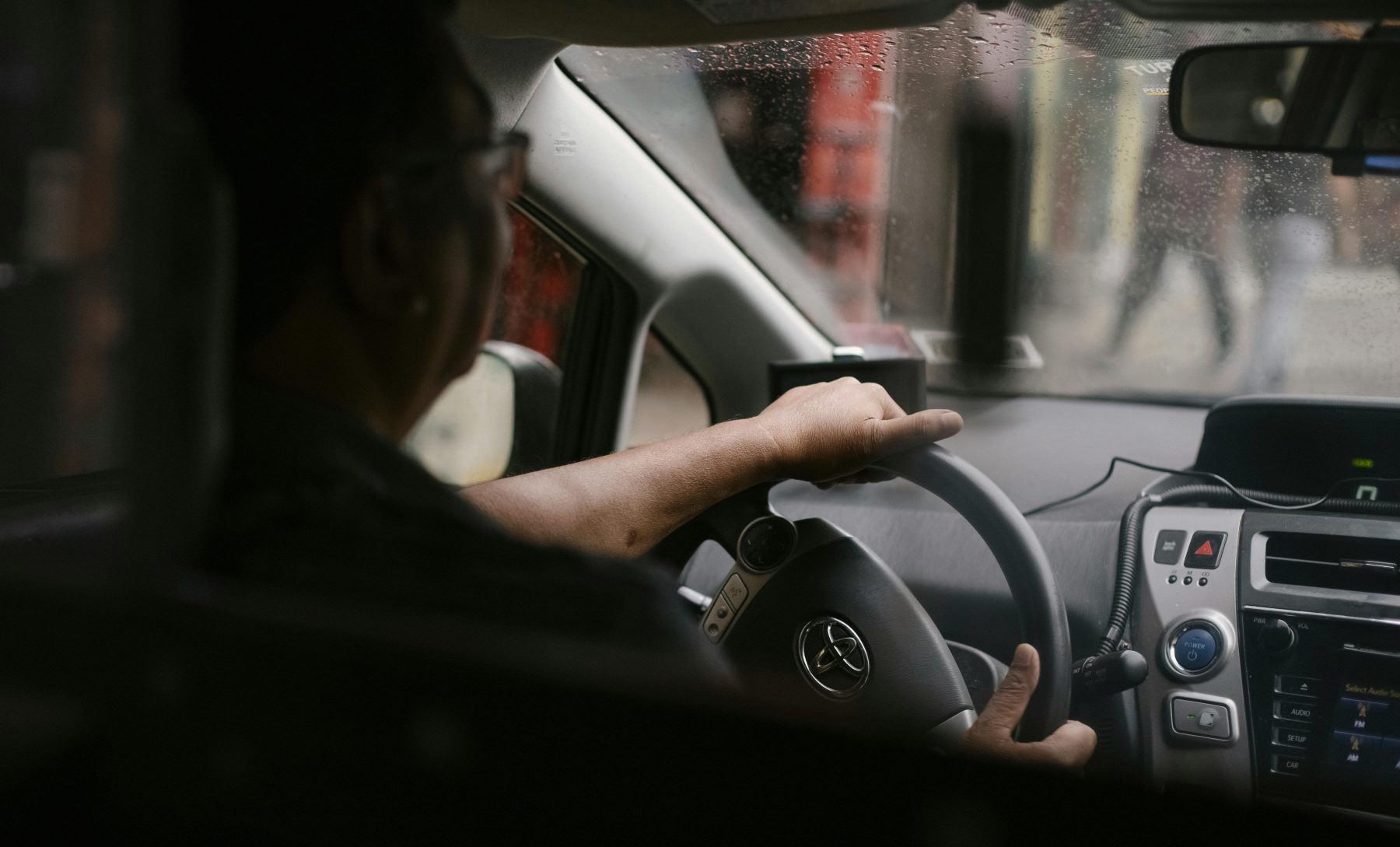
There are two main ways to steer a car. For gentle turns and curves, the “Push-Pull” or “Hand-to-Hand” method is best. This involves sliding the wheel through the hands without crossing them. It allows for steady control and keeps the hands clear of the airbag.
But when it comes to sharp turns in tight city streets, the “Hand-over-Hand” method is more effective. This technique allows the driver to turn the wheel quickly and fully to navigate 90-degree corners or U-turns.
Follow a slow-in, fast-out approach to turns. Brake before entering the turn, so you’re already at a safe speed. Maintain steady control through the curve, then accelerate gently as you straighten out. This helps the steering wheel naturally return to center and keeps the vehicle stable.
If narrow roads make you nervous, take time to understand your vehicle’s width. Practice in an empty parking lot. Use reference points like road markings to gauge space. Confidence grows when you know exactly how much room you truly have.
Driving through tight streets shouldn’t be a stressful ordeal. You transform a cramped alley into a safe passage when you follow these tips.
So, the next time you find yourself on a street that is a little too narrow, take a deep breath and drop your speed. And remember that it’s not about how fast you get through; it’s about getting through without a scratch. Focusing on safety rather than speed will help you stay calm and in control.