Automotive Blog Automotive Blog brings you the latest news, car reviews and information on the automotive industry.
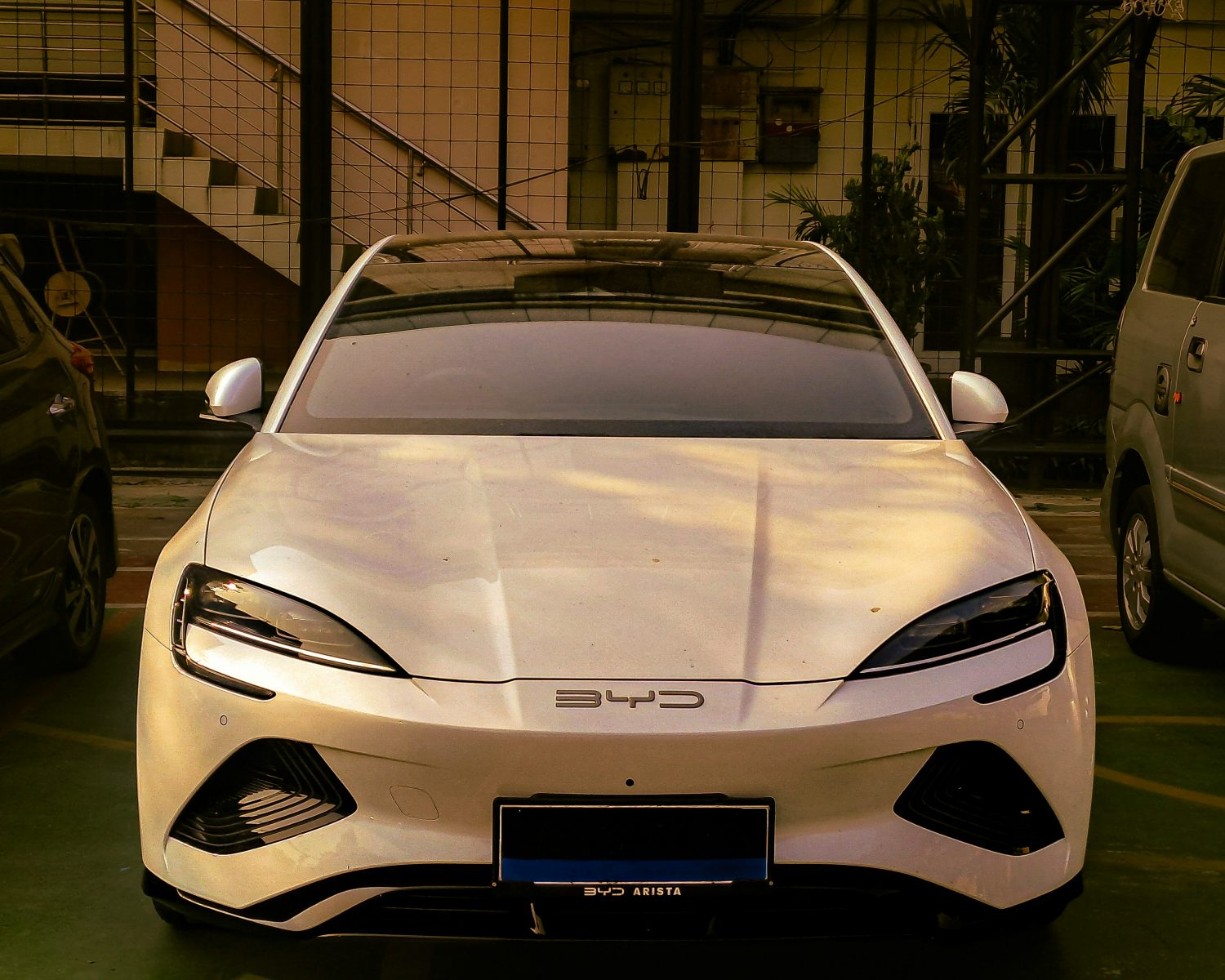
British drivers find themselves looking at new badges at dealerships, shopping centres, and billboard advertisements on highways. Manufacturers like BYD, OMODA, JAECOO, and Leapmotor have evolved from subjects of industry discussion to products that British drivers can consider.
New car models come with electric drivetrains, hybrids, large screens, long feature lists, and price tags aimed at taking market share away from European, Japanese, and Korean firms that have operated in Britain for decades. The speed with which some of these firms are establishing their dealerships is astounding!
Not every new offering necessarily represents good value for money. Consumers must consider factors like insurance costs, servicing costs, charging stations, reliability, and resale value. Nevertheless, Chinese carmakers are no longer merely observers of the British auto market; some of them are now battling it out at the very top.
The Reasons behind the Rapid Growth of Chinese Automakers
China has been successful in building up a large electric-car industry owing to advanced battery manufacturing and high levels of demand. Now, its manufacturers can afford to distribute their technological costs over millions of cars and offer well-equipped cars abroad.
When students do research on transport, business, engineering, and climate change, they may need some time to compare battery types, costs, policies, and the behaviour of consumers. In case of a very busy academic week, getting professional help from a nursing school paper writing service will provide several extra hours needed to read the latest motoring news, visit a dealer, and learn more about launching car brands into the market.
Daniel Parker, an auto-marketing specialist and a consultant to the essay writing service EssayPro, claims that the top Chinese brands are not only selling electric cars in Britain but petrol, hybrid, plug-in hybrid, and fully-electric cars.
Timing is crucial. Nearly half a million new battery-electric cars were registered in the UK in 2025, capturing almost one-quarter of the market share. In just June 2026, the battery-electric car market share crossed the 30% mark.
BYD Is Moving into the Limelight
One can easily see how this trend plays out with BYD. The brand’s model list for the UK includes small electric cars, hatchbacks, saloons, SUVs, estates, plug-in hybrids, and performance-oriented models. Some of these models include the Dolphin Surf, Dolphin, Atto 2, Seal, Sealion 7, and Seal U DM-i.
It is clear that the company is making progress in a big way now. During the first six months of 2026, BYD had as many as 37,795 registrations in the UK – 95% more compared to the same period last year. It has achieved a market share of 3.32%, beating several popular brands.
The key feature of BYD is the fact that it has full control over electric car technology, like batteries. Nevertheless, consumers have to compare specific models rather than just going by the brand name because not all of them might be equally good.
OMODA and JAECOO Are Expanding Extremely Rapidly
OMODA and JAECOO have the same brand group; their products share many dealerships, technology, and mechanical components. OMODA typically concentrates on modern family crossovers, while JAECOO employs a more upmarket and upright SUV design language.
The expansion into the UK market was extremely rapid for both brands. OMODA began in August 2024, followed by JAECOO in January 2025. As of spring 2026, the two brands together have sold more than 66,000 units in the UK through more than 120 retailers. The current lineup features petrol, electric, hybrid, and plug-in hybrid vehicles.
The JAECOO 7 became the biggest hit. It was the third-best-selling model among all new-car models in the UK for the first half of 2026, with 23,840 registrations. Another 3,145 cars were registered in June.
That sales volume is significant for two reasons: it creates awareness of the brand and brings the models into the secondhand marketplace. However, rapid sales growth does not automatically mean an extensive track record of reliability and revaluation after depreciation.
Leapmotor Uses Stellantis for Building Brand Trustworthiness
Leapmotor uses a slightly different approach. Its foreign activities are run via collaboration with the company Stellantis – the group that owns brands like Peugeot, Vauxhall, Citroën, Fiat, and Jeep.
This helps Leapmotor gain access to an already developed network of dealers. It entered the UK market at the beginning of 2025 and progressed from small electric cars like the T03 to bigger vehicles like the C10 and B10. By the end of 2025, there were more than 60 Leapmotor dealerships in the UK with plans for expansion.
The main message of Leapmotor is value. Its cars have all the necessary components – large screen, driver-assistance technologies, cameras, and luxury equipment – without numerous option packages. This could be quite interesting for customers who need an electric car but not a premium brand one.
What Customers Need to Know Before Ordering
A good monthly rate and plenty of features don’t necessarily have to be the end of one’s research. Before opting for any new brand, make sure you know about:
- Local servicing: Learn about the nearest authorised workshop and the typical duration of appointments.
- Insurance: Advanced components, cameras, lighting, and body panels can be costly to repair, even if the cost of the car itself is relatively low.
- Warranty terms: Pay close attention to its limitations on the car, battery, body work, roadside assistance, and commercial usage.
- Real-life range: Cold temperatures, speed on the motorways, heat usage, and heavy load can all affect an EV’s quoted range.
- Charging rate: Big batteries don’t mean fast charging capabilities – make sure you compare the charging curves too.
- Controls and software: Try the menu system, phone integration, voice control, and driver assistance settings.
- Financial risks: A low initial cost of purchasing could become less appealing if the car depreciates fast.
The registration data collected by the SMMT currently serves as a good benchmark that lets us assess whether a certain brand or model is popular because of ads or actual popularity among customers.
The Real Deal, Not Just an Experiment
It seems like Chinese automakers have arrived in the UK at just the right time. The number of people looking to buy an electric car is growing, customers want more technology in a car, and lots of families are looking for good value for money.
The success of BYD proves this point: JAECOO’s car is already one of the leaders in terms of popularity. Meanwhile, OMODA and Leapmotor are quickly increasing the size of their product lines and sales networks. This demonstrates that it is not just a temporary wave of advertising but a real change in the market.
Drive with enthusiasm but also be down-to-earth: test drive the car, find out whether it will be insured and how many local service centres there are and calculate the full price of the ownership. A new badge may involve some uncertainty, but it may also offer the technology and value that older brands now have to work much harder to match.