 Automotive Blog Automotive Blog brings you the latest news, car reviews and information on the automotive industry.
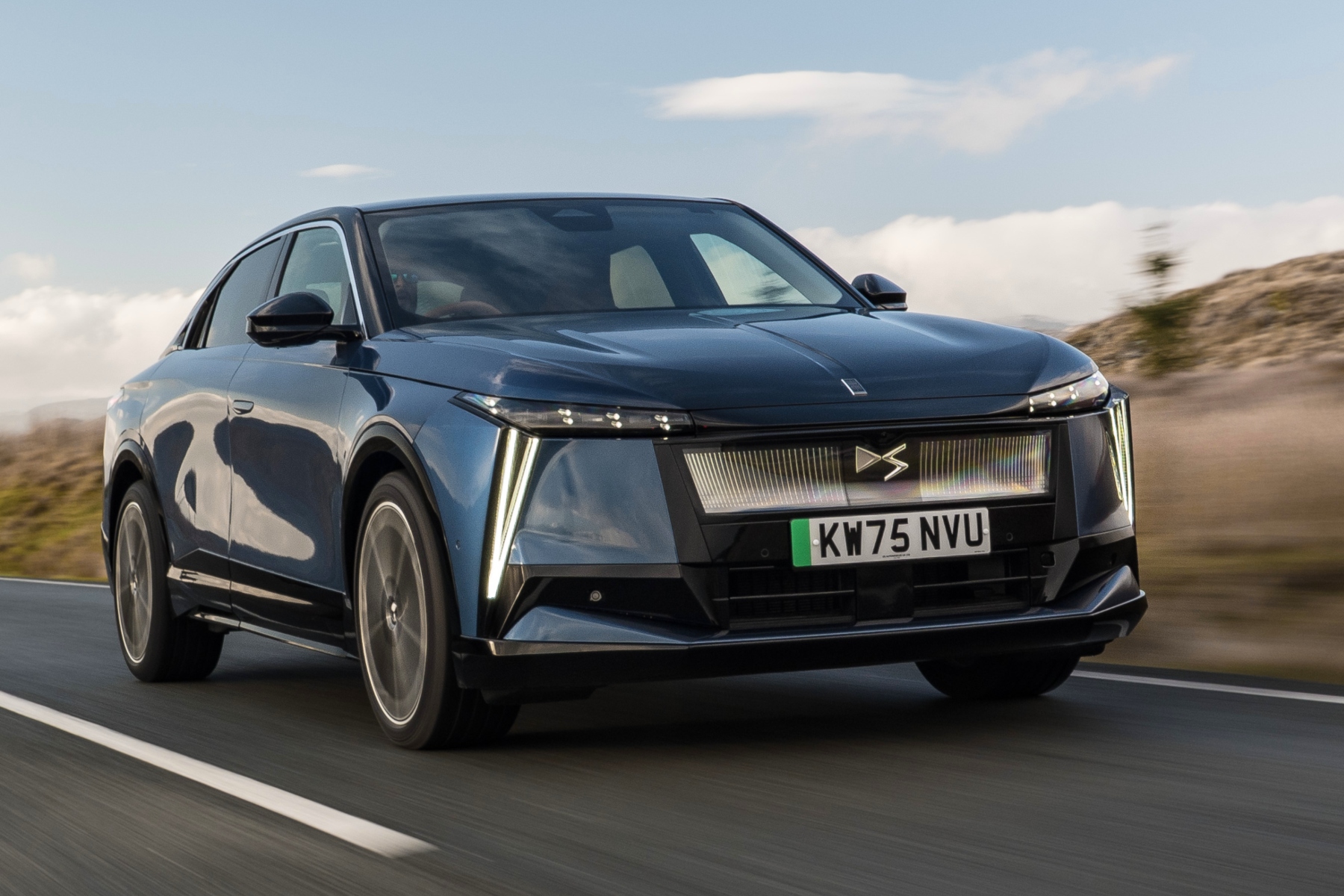
We road test the striking new flagship model of the DS Automobiles range – the 100% electric DS N°8
Historically, French manufacturers have struggled against the might of the Germans when it comes to producing large, luxurious cars that are commercially viable.
Notable exceptions include the iconic Citroen DS, but most (such as the Peugeot 605, Citroen SM and Renault Vel Satis) weren’t able to match the best in business class from BMW, Audi and Mercedes-Benz.
Well, the big news from over the Channel is that DS Automobiles (spun off from Citroen as a premium brand back in 2014) hasn’t thrown in the towel.
Its new flagship – the N°8 – is the only all-electric model in the DS range, and it’s hoped that it will soon start making waves.
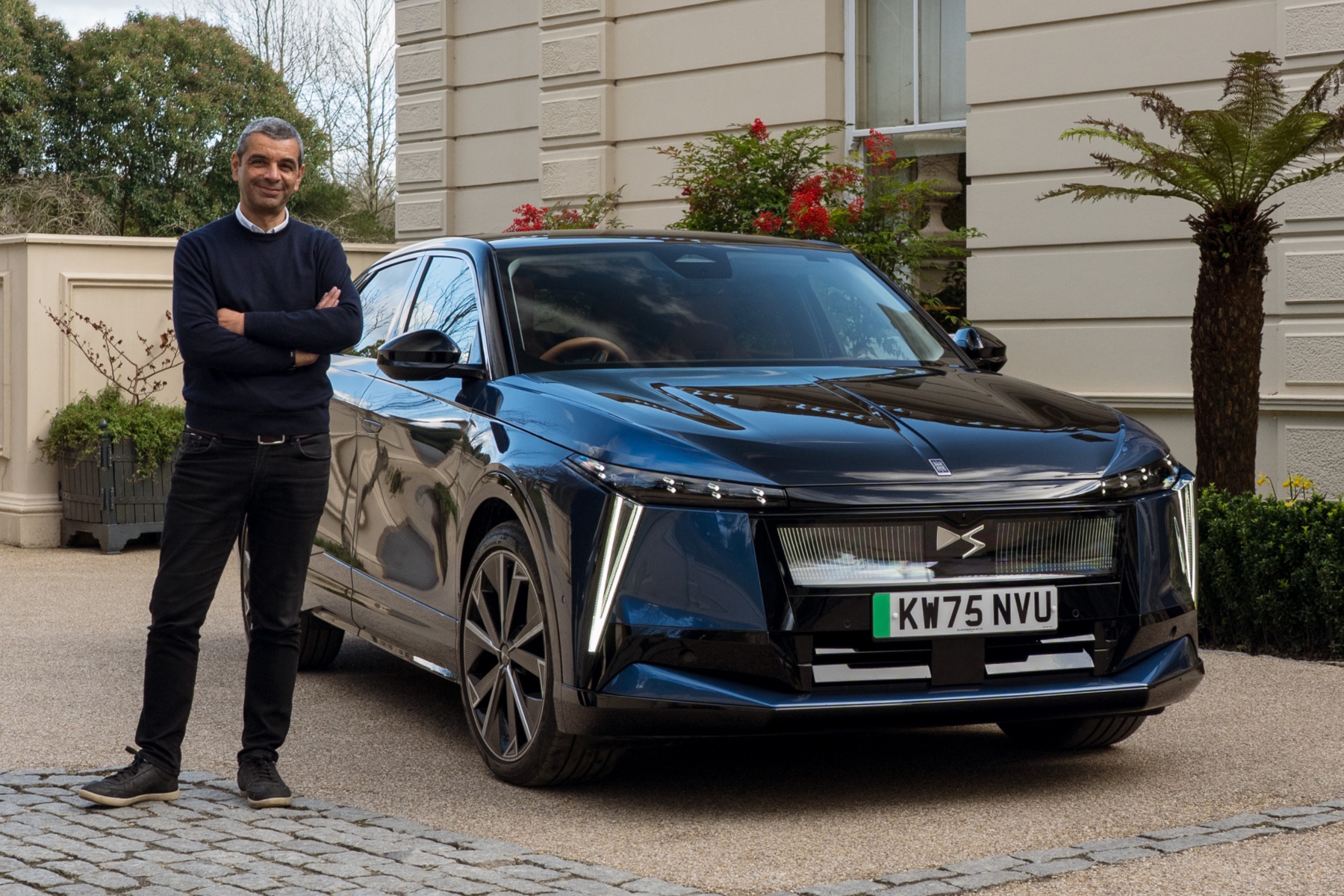
When it comes to first impressions, there’s no doubt that this is a leftfield choice. Not just because DS is still building its identity, but in terms of looks.
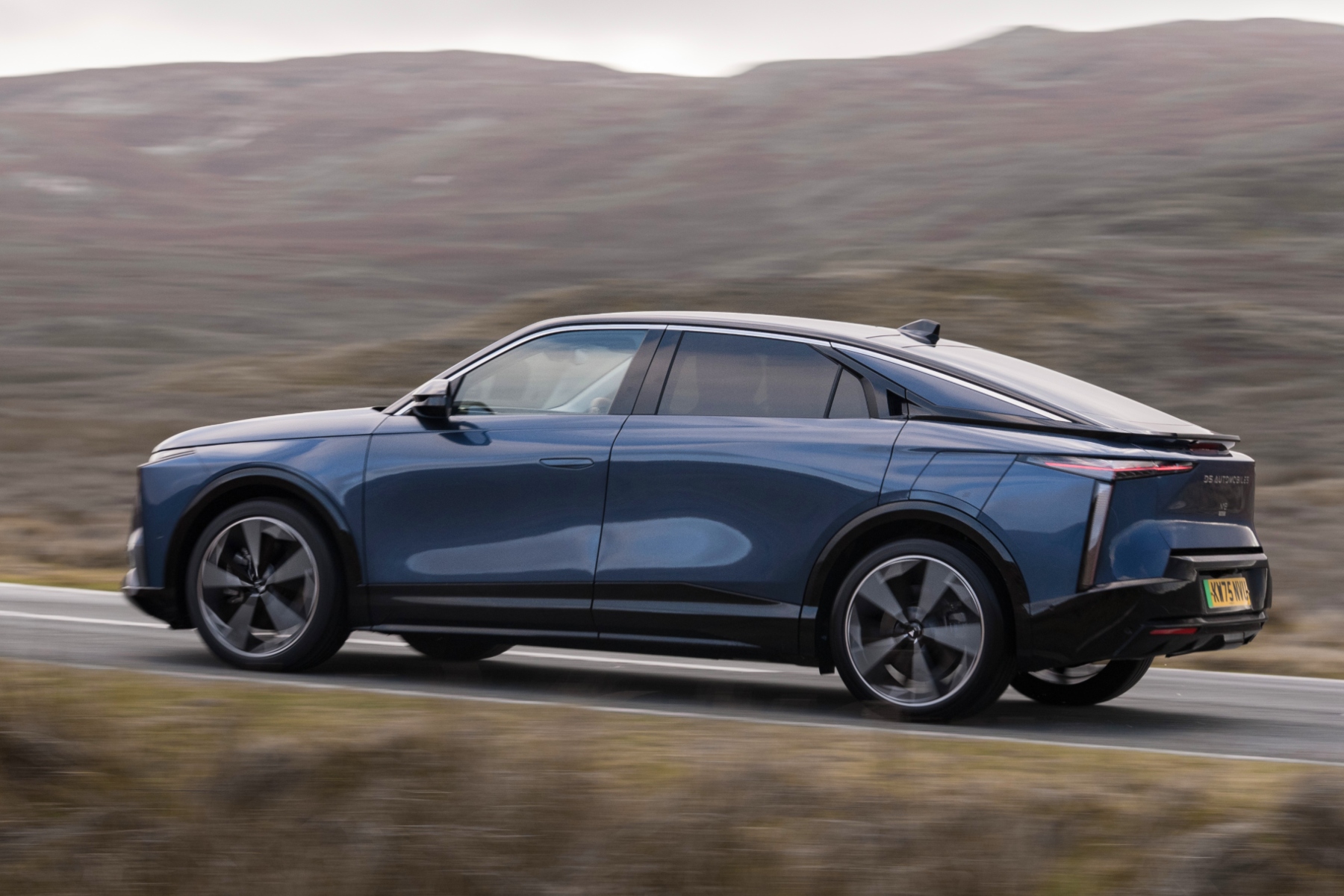
With its rakish coupe-SUV shape, the DS No8 is elegant and bold to some, but just plain ugly to others.
If I’m honest, I’m somewhere between the two positions. DS has dared to be different, and it definitely stands out from the crowd. However, it’s neither a saloon not an SUV, and its proportions are awkward from some angles.
One thing is for sure, you’d never know it was based on the same Stellantis platform as the Citroen C5 Aircross, Peugeot 3008 and Vauxhall Grandland. Ultimately, it rides high, like an SUV, but has a fastback side profile.
To appreciate the plush DS N°8, you have to understand that it’s a statement car with the focus on comfort and luxury.
Competitively priced from £50,780, there’s a choice of two trims – Pallas and Etoile.
Pallas trim is available with front-wheel drive only, and you can choose between either a 74kWh battery with 264bhp power and a 355-mile range, or a 97kWh battery with 284bhp, capable of up to 466 miles. Interestingly, DS quotes a real-world motorway range of 310 miles for this model.
Etoile gets dual motors, all-wheel drive and 380bhp, but range is cut to 426 miles.
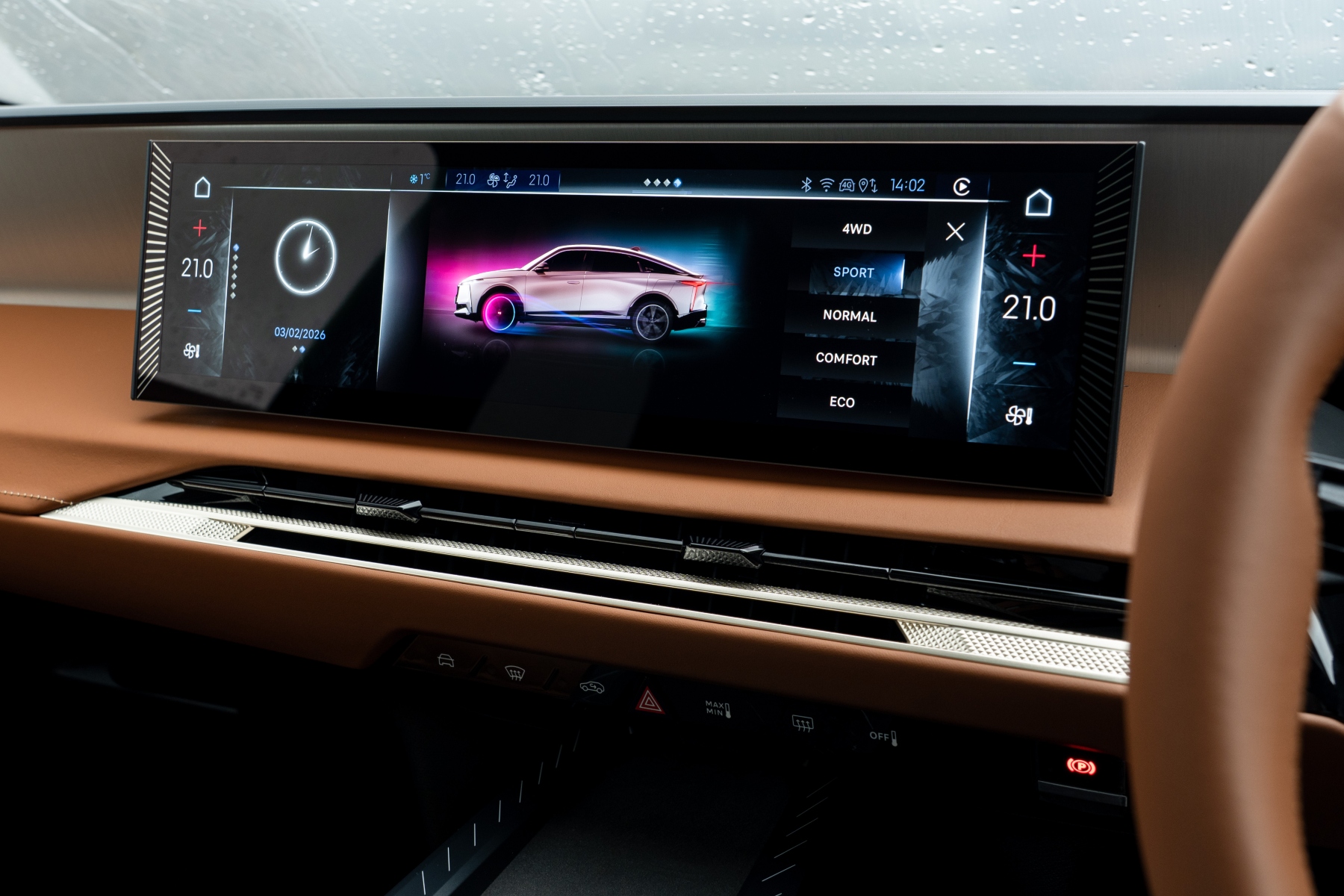
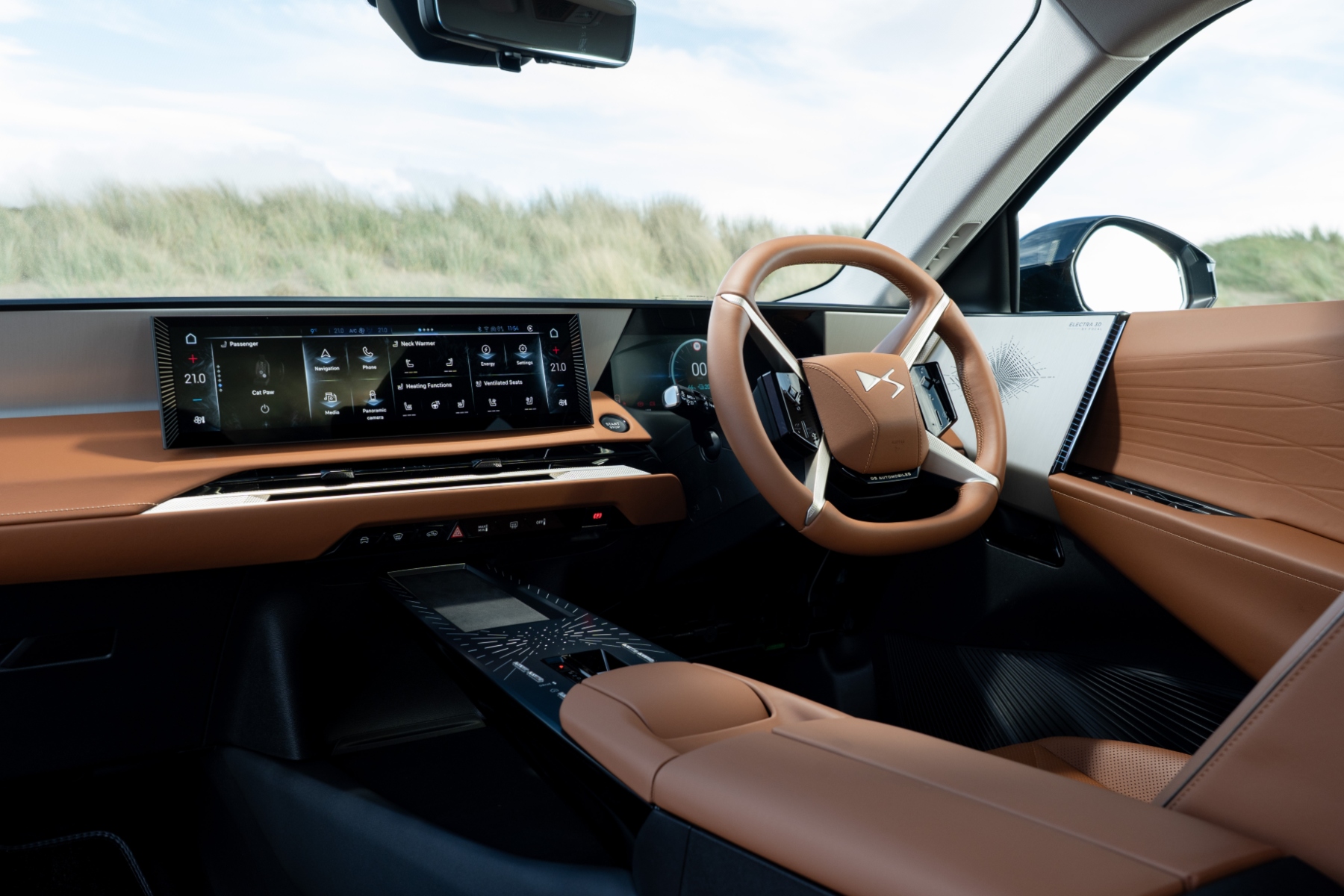
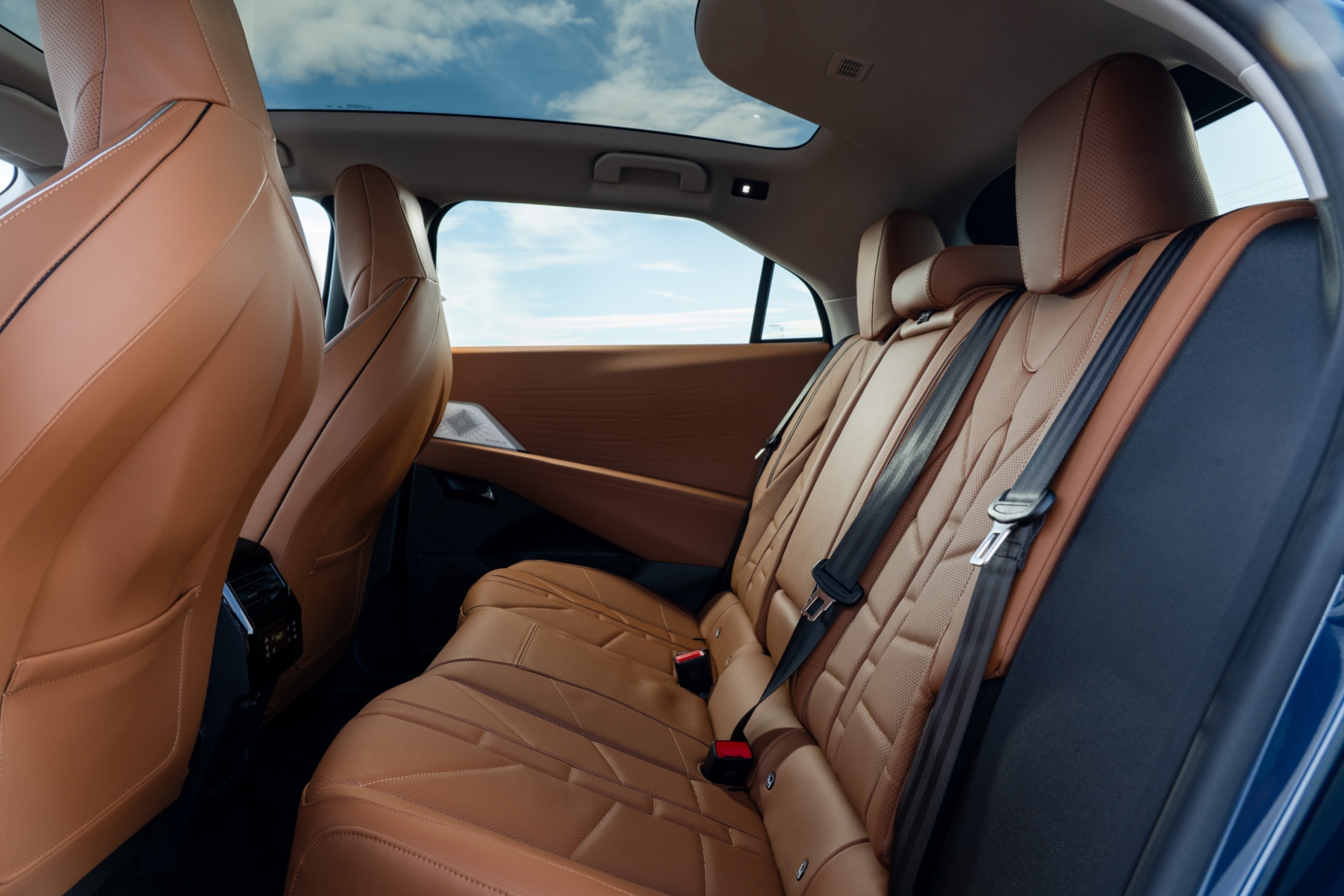
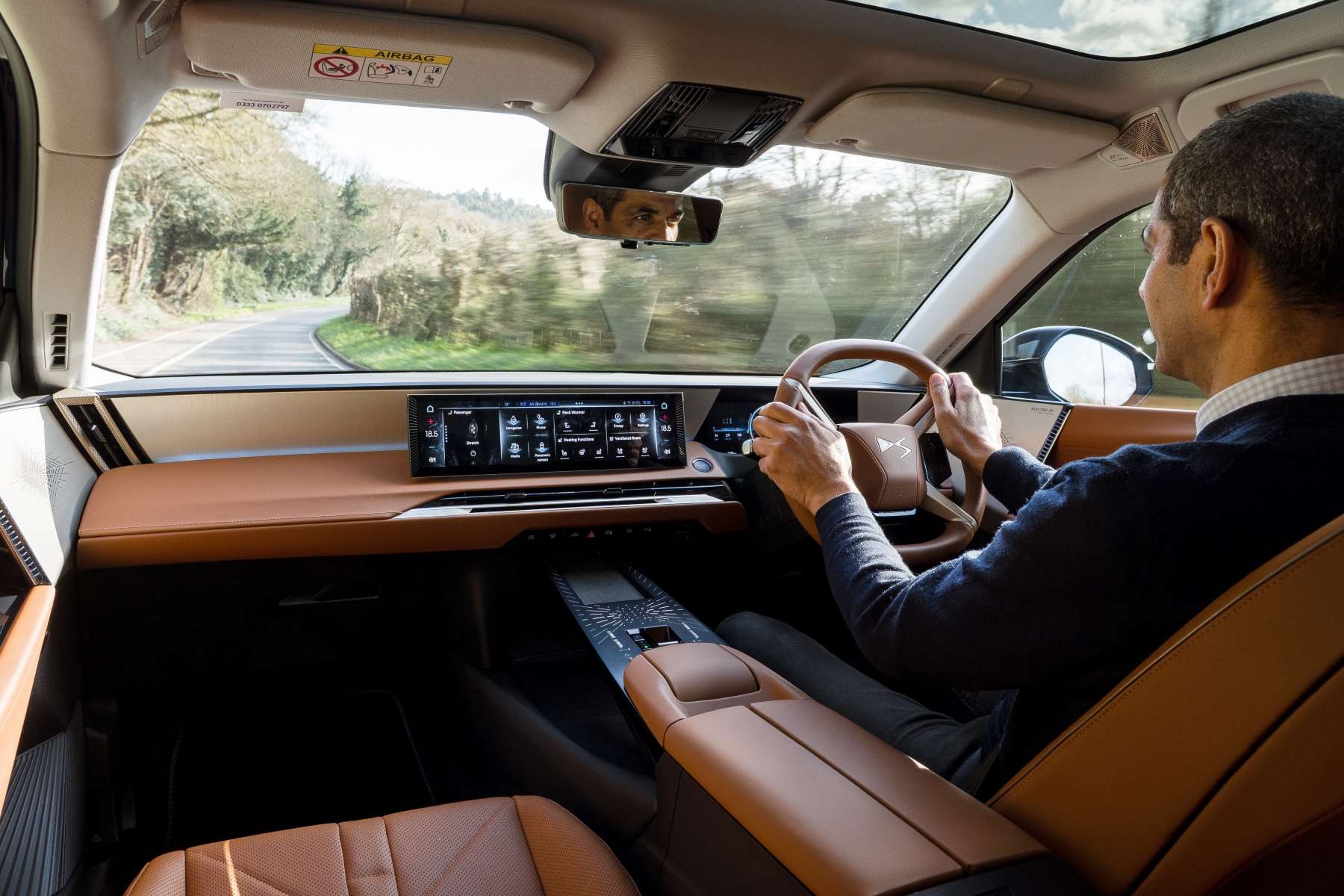
Inside, the DS N°8 doesn’t disappoint with a wide 16-inch touchscreen infotainment system and separate digital driver’s display, a distinctive X-Shaped steering wheel, plus gorgeous seats featuring watchstrap-pattern Nappa leather, with massagers and neck warmers up front.
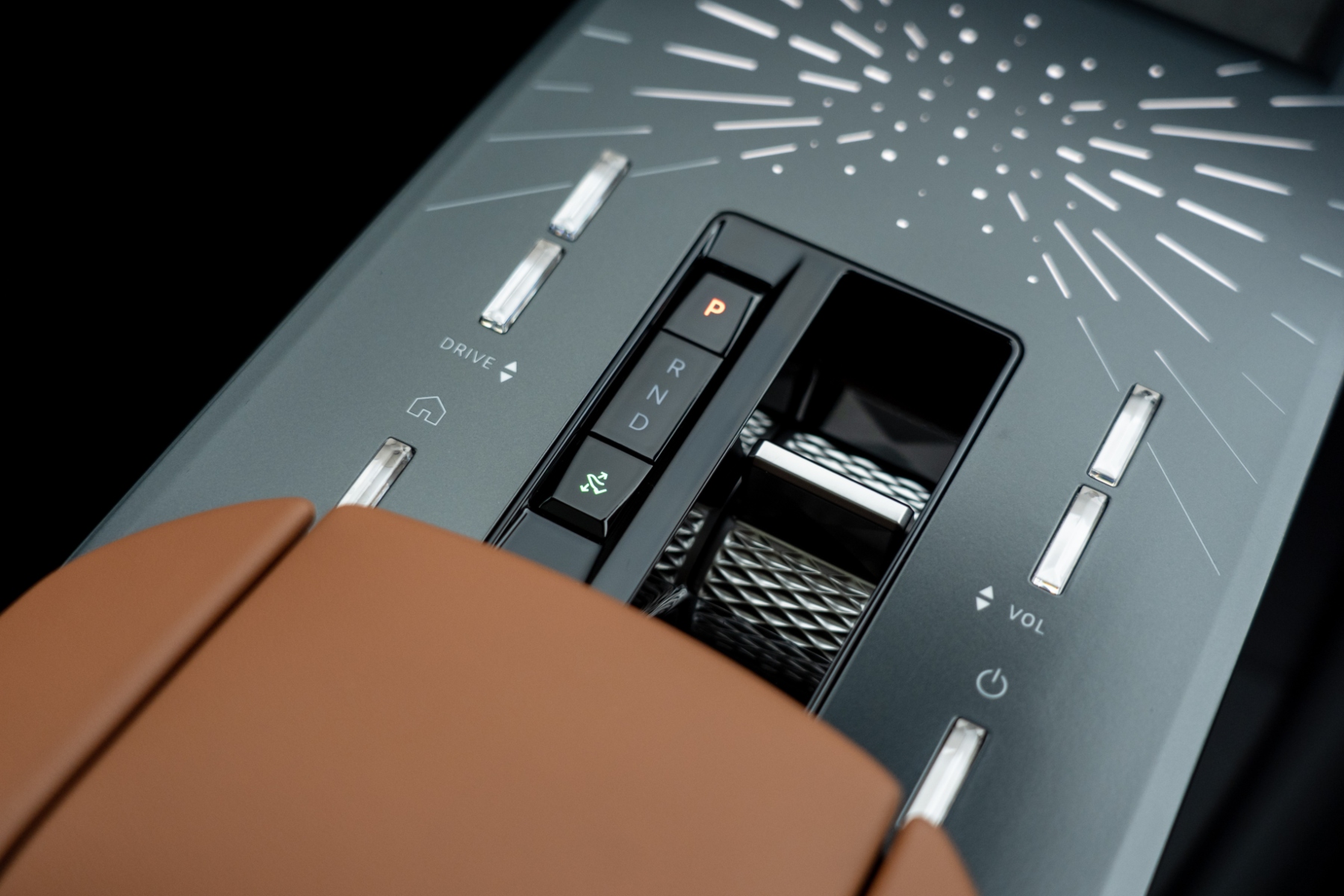
It’s all rather lovely, but if you look closer it is let down by recognisable switchgear from other lesser Stellantis brands such as Peugeot and Vauxhall, and little touches like the aluminium-look inserts which have a plastic feel.
That said, all models are generously equipped with a head-up display, all-around parking sensors, reversing camera, and acoustic laminated windows as standard, while active suspension, which scans the road ahead and adapts to the road surface, is also available.
And it’s worth mentioning that there’s also a decent balance between physical and digital controls, so not everything is accessed via the touchscreen.
As you’d expect, there’s plenty of legroom inside, but taller rear passengers (six-foot and over) will brush their heads on the ceiling – a penalty of that swooping roofline.
The driving position is fine, though I would prefer a slightly lower setting and more steering wheel adjustment.
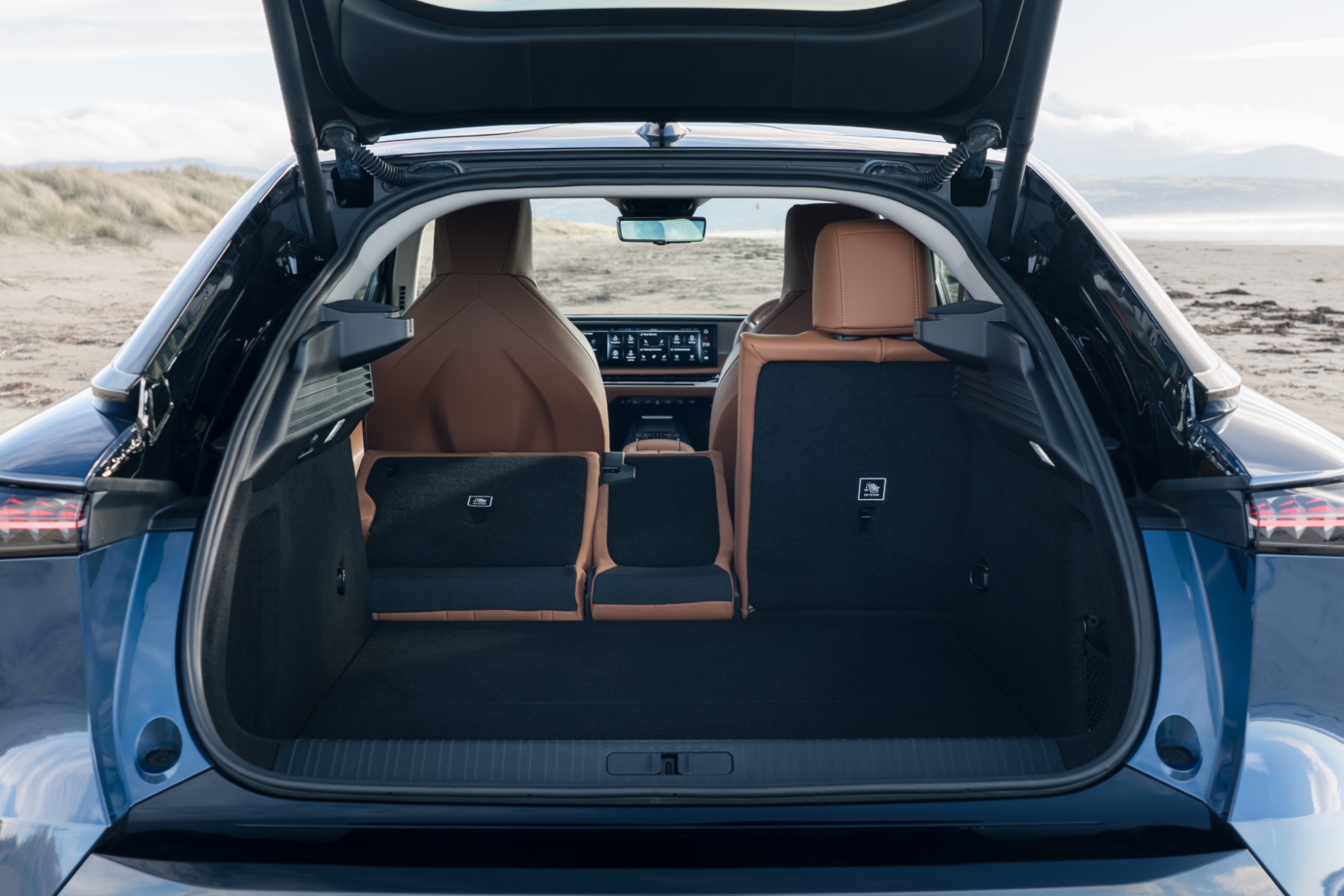
Luggage capacity is a healthy 620 litres (up to 1,553 litres with the rear seats flipped), though the boot is long and fairly shallow.
On the road, the DS No8 initially feels substantial (it’s 4.8 metres long and 1.9 metres wide), but that’s soon forgotten as it wafts along.
Cabin refinement is good for the most part, but it didn’t deliver the magic carpet-like ride I was hoping for. Don’t get me wrong, it soaks up most of the lumps and bumps – it’s just not as smooth or quiet as I hoped (not helped by the enormous 21-inch wheels on my £63,290-plus Etoile AWD test car).
The handling is on the floaty side too, which is fine for long distance cruising, but doesn’t offer the kind of dynamic handling some drivers expect.
And while the steering is nicely weighted, the brakes are distinctly spongy, so on those occasions when you’d like to push it on more entertaining roads, it’s best not to underestimate the stopping distance.
As you’d expect from a powerful EV, the DS N°8 is swift, even in Eco, Comfort and Normal modes, while Sport sharpens it when it comes to handing and throttle response.
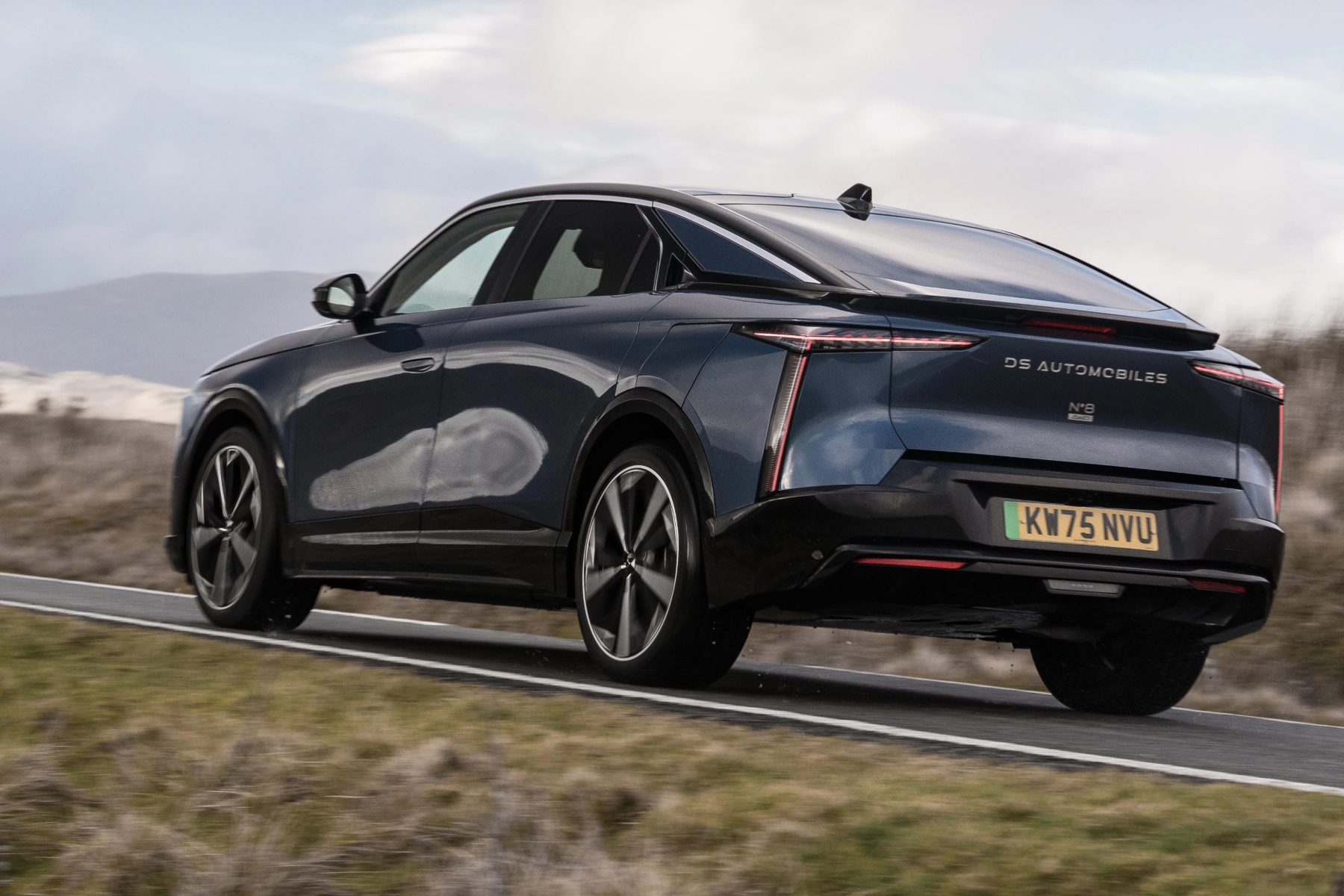
General grip, and traction out of corners, is good thanks to the all-wheel drive system, plus it manages to stay surprisingly flat in more challenging corners.
There are three levels of regenerative braking, activated by the steering-wheel paddles, plus a “one-pedal” button for maximum energy recovery (it’s capable of bringing the car to a full stop without the brake pedal).
When you do need to charge, the N°8 can receive up to 160kW of power and a 20-80% boost will take 27 minutes.
Both front-wheel drive configurations claim 4.8 mi/kWh, while the AWD model averages a slightly lower 4.4 mi/kWh.
I didn’t achieve that kind of efficiency on the AWD, and I’d need a week or so with the car to come up with a real-world estimate.
Based on a few hours of driving in mixed roads on a chilly day in the UK, I’d say the range of the AWD version I drove is closer to 360 miles than the claimed 431 miles. Still more than enough.
So, the DS N°8 is a bit of a mixed bag, but if luxury, range and bold styling top your wishlist, then you won’t be disappointed.
And just in case you’re wondering, the DS N°8’s many rivals include the Polestar 4, BMW iX3, Tesla Model Y, Audi Q6 e-tron Sportback, Mercedes-Benz EQC and Cupra Tavascan.
Verdict: If you’re looking for a big, smooth, premium EV with a substantial range that stands out from the crowd, then the DS N°8 is definitely worth a test drive.


